In the intricate and often bewildering landscape of healthcare finance, terms like “deductibles,” “co-payments,” and “co-insurance” are frequently encountered, yet their collective impact on an individual’s financial exposure can remain opaque. Among these various cost-sharing mechanisms, one stands out as a critical financial safeguard: the out-of-pocket maximum. This seemingly technical term represents a pivotal ceiling in health insurance policies, providing a crucial layer of protection against potentially catastrophic medical expenses. Understanding the out-of-pocket maximum is not just about comprehending insurance jargon; it’s about grasping the true extent of your financial responsibility for healthcare in any given year, enabling informed decision-making and strategic budgeting.
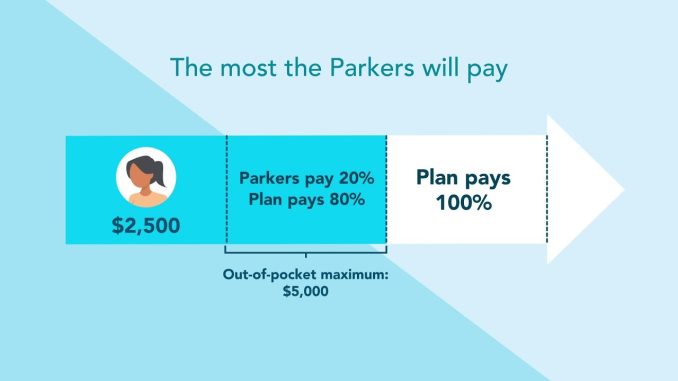
At its core, the out-of-pocket maximum is the absolute most you will have to pay for covered healthcare services in a policy year. Once your accumulated payments for deductibles, co-payments, and co-insurance reach this predetermined limit, your health insurance plan will typically begin to pay 100% of the costs for all covered, in-network medical services for the remainder of that policy year. It acts as a financial cap, protecting individuals and families from overwhelming medical bills in the event of a serious illness, chronic condition, or unexpected accident. Without such a limit, unforeseen health crises could theoretically lead to limitless financial strain, making the out-of-pocket maximum a fundamental aspect of financial security within many health insurance frameworks.
To fully appreciate the function of an out-of-pocket maximum, it’s essential to understand the typical cost-sharing components that contribute to it:
Firstly, the **deductible** is the amount you must pay for covered medical services before your insurance plan starts to pay. For example, if your deductible is €1,000, you would pay the first €1,000 of your medical bills. Once met, your co-insurance and co-payments typically begin.
Secondly, **co-payments (Zuzahlungen)** are fixed amounts you pay for a covered service, such as a doctor’s visit or a prescription drug, after you’ve met your deductible. If your co-payment for a specialist visit is €10, you would pay that amount at each visit.
Thirdly, **co-insurance** is a percentage of the cost of a covered service that you pay after you’ve met your deductible. For example, if your plan has an 80/20 co-insurance, it means the insurance pays 80% and you pay 20% of the cost for covered services until your out-of-pocket maximum is reached.
All of these payments – deductibles, co-payments, and co-insurance – accumulate towards your out-of-pocket maximum. Once your combined spending on these elements hits the maximum, your insurer steps in to cover all subsequent eligible costs for the rest of the year. This provides immense peace of mind, knowing that even in the face of significant medical needs, your financial liability has a defined limit.
It is equally important to clarify what usually *doesn’t* count towards the out-of-pocket maximum. Premiums, which are the regular payments you make to keep your insurance coverage active, never count towards this limit. Similarly, costs for services not covered by your plan, or charges from out-of-network providers (if your plan requires in-network care), typically do not contribute to the maximum. Understanding these exclusions is vital to avoid unexpected costs.
Now, it is crucial to address the specific context of Germany, where the health insurance system operates fundamentally differently from, for instance, the U.S. model where the out-of-pocket maximum is a cornerstone. In Germany, the concept of a direct “out-of-pocket maximum” as a single, all-encompassing cap on patient contributions across all services **does not directly exist within the statutory health insurance (GKV) system**, which covers around 90% of the population.
Instead, the GKV system features **regulated co-payments (Zuzahlungen)** for specific services, but these are generally capped on an individual basis, rather than being a single, aggregated maximum across all healthcare expenditures. For instance, there are fixed co-payments for prescription medications (typically €5 to €10 per item, capped at the cost of the medicine), hospital stays (currently €10 per day for a maximum of 28 days per year), and certain rehabilitation measures. For these co-payments, there is a **general annual cap (Belastungsgrenze)**, which typically amounts to 2% of a household’s gross annual income. For individuals with chronic illnesses, this cap is even lower, at 1% of gross annual income. Once this individual or household co-payment ceiling is reached, they can apply for an exemption from further co-payments for the remainder of the calendar year. This functions as a safety net, ensuring that co-payments do not become an excessive financial burden, but it is distinct from a U.S.-style out-of-pocket maximum which aggregates deductibles and co-insurance as well.
For individuals with **private health insurance (PKV) in Germany**, the concept of an “out-of-pocket maximum” is more analogous to the U.S. model. PKV plans are highly customizable, and many include a **deductible (Selbstbehalt or Franchise)** which functions similarly to its U.S. counterpart, requiring the insured to pay a certain amount of medical costs before the insurance coverage kicks in fully. Beyond the deductible, some PKV plans may also incorporate co-insurance or specific limits on certain benefits, meaning that a total annual “out-of-pocket” liability can exist, effectively acting as a maximum. However, these structures vary significantly by individual PKV tariff and insurer, requiring careful review of the specific policy terms.
In conclusion, while the precise terminology and structure may differ across healthcare systems, the underlying principle of protecting individuals from financially crippling medical expenses remains paramount. In the U.S. context, the out-of-pocket maximum serves as a clear, comprehensive ceiling for annual medical expenditures. In Germany, the statutory health insurance system utilizes regulated co-payments with specific annual caps to provide a similar safeguard against excessive costs. For those with private health insurance in Germany, the concept of a deductible often combines with other benefit limits to create a de facto maximum. Regardless of the system, a thorough understanding of your health insurance policy’s cost-sharing mechanisms is essential for financial planning, making informed healthcare decisions, and ensuring that unexpected medical events do not lead to insurmountable debt. It is a critical piece of the financial puzzle that every insured individual should fully comprehend.