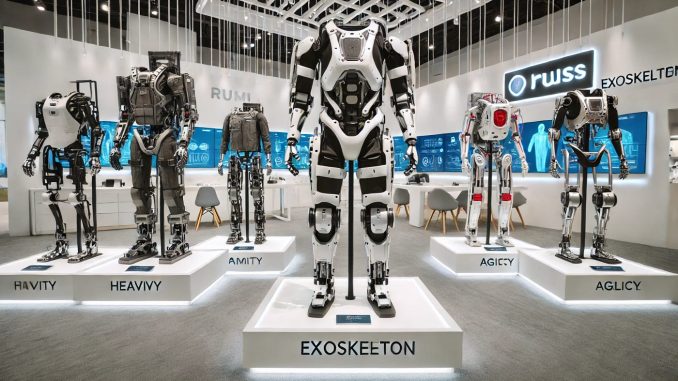
The demands of physical labor have remained a constant across industries for centuries, from the construction site to the factory floor and the bustling logistics warehouse. However, what *is* changing dramatically is how humans engage with these physically taxing tasks, thanks to the advent of wearable robotics, particularly **exoskeletons**. These innovative devices are no longer confined to the realm of science fiction; they are increasingly being integrated into real-world work environments, fundamentally reshaping human capabilities, enhancing safety, and revolutionizing productivity in a way that benefits both employees and businesses alike.
At its core, an exoskeleton is a wearable mechanical device that augments, supports, or restores human movement and strength. They come in various forms, from partial suits designed for specific body parts like the back or shoulders, to more comprehensive systems. Broadly, industrial exoskeletons can be categorized into two main types: **passive** and **active (or powered)**. Passive exoskeletons are unpowered and rely on mechanical spring systems, levers, and clever weight distribution to offload strain from the user’s body. They provide support by redirecting forces or assisting with posture. Active exoskeletons, on the other hand, incorporate motors, actuators, and sensors to provide powered assistance, actively augmenting the user’s strength and endurance. While passive systems are generally lighter, more affordable, and simpler to implement, active systems offer a higher degree of assistance for heavier or more complex tasks. Both types, however, share the common goal of making physically demanding work safer, more efficient, and less fatiguing for the human operator.
One of the most significant impacts of exoskeletons is their profound contribution to **worker safety and injury prevention**. Musculoskeletal disorders (MSDs), such as back pain, strains, and joint injuries, are alarmingly common in physically demanding professions, leading to significant absenteeism, disability claims, and reduced quality of life for workers. Exoskeletons directly address this issue by reducing the physical load on the body. For example, back-assist exoskeletons can help distribute the weight of lifted objects evenly across the body, lessening the strain on the lower back and knees. Similarly, shoulder and arm support exoskeletons are invaluable for tasks involving repetitive overhead work, such as in automotive assembly or painting, by reducing muscle fatigue and discomfort. By promoting proper posture and biomechanics, these wearable devices mitigate the chances of immediate injury and also prevent the long-term cumulative stress that often leads to chronic pain and debilitating conditions. This directly translates into fewer workers’ compensation claims and a healthier, more sustainable workforce.
Beyond safety, exoskeletons are proving to be powerful tools for **enhancing productivity and efficiency**. When workers are less fatigued and physically strained, they can perform tasks more consistently and effectively over longer periods. Exoskeletons essentially extend the physical endurance of a human, allowing them to maintain a higher work pace without experiencing the typical exhaustion that sets in. For instance, in a logistics warehouse, where employees frequently lift and move heavy boxes, a lifting-assist exoskeleton can reduce the physical effort required, enabling faster order fulfillment and improved throughput. This increased capacity doesn’t necessarily mean workers are doing more strenuous work; rather, they are performing their tasks with less physical exertion, leading to sustained focus and fewer errors. Some studies have shown notable increases in handling times and efficiency, particularly in strenuous tasks like unloading containers and palletizing.
The human element of the workforce also benefits significantly from the adoption of exoskeletons, leading to **improved worker morale and retention**. When employers invest in technologies that visibly prioritize employee health and well-being, it fosters a sense of being valued and supported. Workers feel more capable and confident in their roles, knowing that the physical demands of their jobs are being eased. This can be particularly beneficial for industries facing labor shortages, as it makes physically challenging roles more attractive to a wider pool of potential employees, including an aging workforce. With reduced physical stress and a lower risk of injury, employees are more likely to remain in their roles longer, leading to lower turnover rates and the retention of valuable experience and institutional knowledge. Companies like IKEA have notably embraced exoskeletons in their logistics and warehouse operations across multiple countries, reporting reduced strain on muscles and joints and improved posture among their employees.
While the benefits are clear, the integration of exoskeletons is not without its considerations. Factors such as the specific type of task, the work environment, user training, and the initial investment cost all play a role. There isn’t a “one-size-fits-all” solution, and successful deployment often involves pilot programs to test different models and gather employee feedback. For example, German multi-channel retailer the Witt Group is currently testing various exoskeleton models in its logistics department to support back, hip, and shoulder muscles, gathering crucial insights from their employees. As the technology continues to mature, and as costs decrease, the adaptability of exoskeletons to various job functions and their seamless integration with existing workflows will only improve.
In conclusion, exoskeletons are rapidly moving from niche applications to becoming an integral part of modern industrial workplaces. By augmenting human capabilities, drastically reducing the risk of musculoskeletal injuries, boosting productivity, and enhancing worker well-being, these wearable robotic devices are fundamentally revolutionizing how physical labor is performed. They represent a powerful synergy between human intelligence and machine assistance, creating safer, more efficient, and ultimately more humane work environments. As companies increasingly prioritize both profitability and employee welfare, the role of exoskeletons will undoubtedly continue to expand, shaping a future where physical labor is less taxing and more sustainable for the human body.