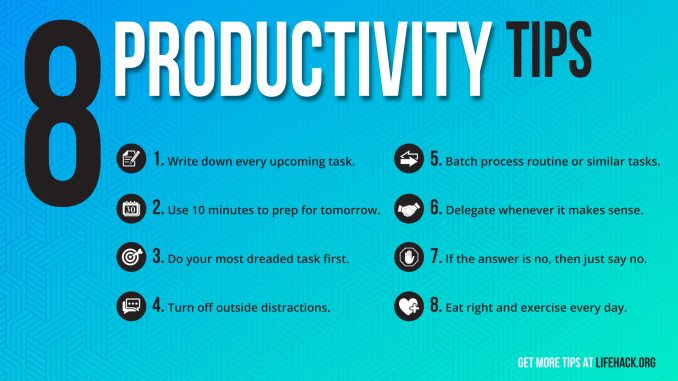
In the demanding landscape of modern education, where academic rigor meets a multitude of extracurricular opportunities and personal commitments, students often find themselves grappling with the perennial challenge of time management. The sheer volume of coursework, coupled with the desire to maintain a healthy social life and pursue personal interests, can quickly lead to feelings of overwhelm and diminished performance. However, success in this environment isn’t solely about innate intelligence or endless hours; it’s increasingly about strategic efficiency. The most successful students are often those who have mastered a set of productivity hacks, turning chaotic schedules into streamlined pathways to academic excellence and personal well-being. These aren’t just trendy tips; they are actionable strategies rooted in an understanding of human psychology and effective learning principles.
One of the most foundational and transformative productivity hacks for students is the implementation of **strategic planning and prioritization**. Rather than diving headfirst into assignments as they arrive, truly productive students take a panoramic view of their workload. This involves mapping out all deadlines, exams, and projects for the entire semester or academic period, often using a digital calendar or a physical planner. Once this overview is established, they prioritize tasks not just by urgency, but by importance and effort required. The “Eisenhower Matrix,” for instance, can be a useful mental model, categorizing tasks into “Urgent/Important,” “Important/Not Urgent,” “Urgent/Not Important,” and “Neither Urgent nor Important.” By focusing energy on the “Important” tasks first, particularly those that are “Not Urgent,” students can proactively tackle significant assignments without the stress of last-minute cramming, ensuring higher quality work and less anxiety. This proactive planning transforms studying from a reactive scramble into a deliberate, controlled process.
Another incredibly effective strategy is the **Pomodoro Technique**, a time management method developed by Francesco Cirillo. This hack leverages the power of focused bursts of activity followed by short, restorative breaks. Students set a timer for 25 minutes of intense, uninterrupted work on a single task. When the timer rings, they take a brief 5-minute break. After four “Pomodoros,” a longer break of 15-30 minutes is taken. This structured approach helps combat procrastination by breaking down large tasks into manageable segments, and it enhances focus by providing regular, predictable intervals for mental rejuvenation. It trains the brain to concentrate for specific periods, reducing the temptation to multitask or get sidetracked. The built-in breaks also prevent burnout, making sustained study sessions more feasible and less draining. Imagine tackling a daunting research paper, one focused 25-minute chunk at a time; the sheer weight of the task becomes significantly lighter.
Furthermore, **optimizing the study environment** plays a crucial, though often underestimated, role in student productivity. A cluttered desk often reflects a cluttered mind. Creating a dedicated study space that is clean, well-lit, and free from distractions can significantly improve focus and efficiency. This means putting away your phone, closing unnecessary tabs on your computer, and ensuring your workspace is comfortable and conducive to concentration. Some students find background noise helpful, while others require absolute silence. The key is to experiment and identify what works best for *you*. Establishing a routine of always studying in the same designated spot can also help prime your brain for concentration as soon as you enter that space, creating a powerful psychological cue for productive work.
Beyond the physical space, managing digital distractions is paramount. This is where hacks like **website blockers, “Do Not Disturb” modes, and strategic use of social media** come into play. It’s remarkably easy to fall down the rabbit hole of social media feeds or endless online Browse. Using apps that temporarily block distracting websites during study sessions can be a game-changer. Similarly, putting your phone on silent and out of sight, or utilizing its built-in “focus” modes, minimizes interruptions. For necessary digital tools, creating separate user profiles or browser windows for academic work versus personal Browse can help delineate boundaries. The goal isn’t to eliminate digital interaction entirely, but to ensure it serves your productivity, rather than hindering it.
Finally, integrating **regular physical activity and sufficient rest** into one’s schedule is not a luxury for productivity; it’s a fundamental necessity. Many students mistakenly believe that sacrificing sleep or exercise will create more time for studying. In reality, the opposite is true. Chronic sleep deprivation impairs cognitive functions, memory consolidation, and problem-solving abilities, making study time far less effective. Regular physical activity, even short bursts, improves blood flow to the brain, reduces stress, and boosts mental clarity and energy levels. These elements aren’t “time off” from productivity; they are vital components that recharge the mental batteries, ensuring that when a student sits down to work, they are operating at their peak intellectual capacity. A well-rested and physically active student will often achieve more in fewer hours than a perpetually exhausted one.
In essence, mastering student productivity is about intelligent design rather than brute force. By strategically planning, employing focused work intervals, optimizing the study environment, minimizing digital distractions, and prioritizing physical well-being, students can transform their academic experience. These hacks are not just about getting more done; they are about fostering a sustainable approach to learning that reduces stress, enhances understanding, and ultimately paves the way for both academic achievement and a healthier, more balanced life.