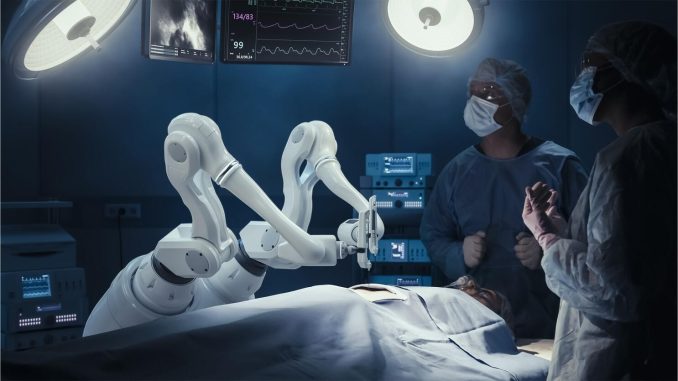
The operating room has long been considered the ultimate domain of human skill, precision, and judgment. Surgeons, with years of rigorous training and experience, perform intricate procedures where every tremor, every millimeter of movement, can have profound consequences. Yet, in recent decades, a new force has entered this hallowed space: surgical robots. These sophisticated machines, often controlled by human surgeons, have sparked a compelling debate: are robots more accurate than human surgeons, and what does this mean for the future of medicine?
At first glance, the very idea of a robot performing surgery evokes images of flawless, superhuman precision. Indeed, robotic surgical systems offer several inherent advantages that contribute to enhanced accuracy. Perhaps the most celebrated is the elimination of physiological tremor. Even the steadiest human hand exhibits microscopic tremors, which can be amplified in delicate surgical fields. Robotic systems, however, can filter out these involuntary movements, allowing for exceptionally smooth and stable instrument control. This translates to incredibly steady movements, crucial for micro-surgery or procedures involving very fine structures like nerves and tiny blood vessels.
Furthermore, robotic systems often provide surgeons with significantly enhanced visualization. Modern surgical robots, such as the widely used da Vinci system, typically employ high-definition 3D cameras that magnify the surgical site manifold. This immersive, magnified view allows surgeons to perceive anatomical structures with a level of detail that surpasses what is possible with the naked eye or even traditional laparoscopic cameras. Improved visualization directly correlates with increased precision, as surgeons can more accurately identify tissue planes, navigate complex anatomy, and avoid critical structures. The ability to see in greater detail empowers surgeons to make more precise incisions and sutures, reducing the risk of accidental damage to surrounding healthy tissue.
Another key advantage lies in the robotic arms’ superior dexterity and range of motion. Unlike human wrists, which have a limited range of articulation, robotic instruments can articulate with far greater freedom, sometimes rotating 360 degrees or bending in ways that mimic or even exceed the natural capabilities of a human hand. This enhanced dexterity allows surgeons to access hard-to-reach areas within the body through much smaller incisions. This is particularly beneficial in minimally invasive surgery, where procedures are performed through tiny ports rather than large open incisions. Smaller incisions typically lead to less pain, reduced blood loss, lower risk of infection, and faster recovery times for patients, outcomes that are directly linked to the precision offered by the robotic system.
However, it is crucial to clarify a common misconception: current surgical robots do not operate autonomously. They are tools, albeit highly sophisticated ones, that augment the surgeon’s capabilities, not replace them. The surgeon remains firmly in control, manipulating the robotic arms from a console, where their hand and finger movements are scaled down and translated into ultra-precise movements of the surgical instruments. The robot’s “accuracy” is thus a reflection of the surgeon’s skill, amplified and refined by the technological interface. The machine executes the commands with unwavering precision, but the strategic decisions, the critical judgment calls, and the ability to adapt to unforeseen anatomical variations or complications still rest squarely with the human expert.
Despite their advantages, robotic surgery also presents certain challenges that can impact overall accuracy. One notable limitation is the reduced haptic (tactile) feedback. Surgeons performing traditional open surgery or even conventional laparoscopic surgery rely heavily on the sense of touch to gauge tissue tension, identify anomalies, and differentiate between various tissue types. While advancements are being made in developing haptic feedback systems for robots, current systems often lack the nuanced tactile sensations that a human hand provides. This can be a learning curve for surgeons, requiring them to compensate by relying more heavily on visual cues and their experience. Improper input of information or a misjudgment by the human surgeon, even with the most precise robotic system, can still lead to complications.
Furthermore, the initial investment and ongoing maintenance costs of robotic surgical systems are substantial. This can limit their accessibility, particularly in smaller hospitals or developing regions. The learning curve for surgeons to become proficient in using these systems is also significant, requiring specialized training and practice. While the enhanced precision ultimately benefits the patient, the journey to proficiency for the surgical team is an investment of time and resources.
In conclusion, the question of whether robots are “more accurate” than human surgeons is perhaps not the right framing. It’s more accurate to say that robotic surgical systems enhance and amplify a human surgeon’s accuracy and capabilities. They provide tools that overcome human physiological limitations, offer superior visualization, and enable greater dexterity in confined spaces. This synergy leads to procedures that are often more precise, less invasive, and result in better patient outcomes in terms of reduced pain, quicker recovery, and fewer complications. As artificial intelligence continues to advance, future generations of surgical robots may incorporate even greater levels of intelligence, assisting with real-time decision support, identifying subtle abnormalities, and further refining surgical movements. However, the critical human element – the surgeon’s judgment, adaptability, and empathetic connection with the patient – will remain indispensable. The future of surgery lies not in robots replacing surgeons, but in a powerful partnership where technology empowers human expertise to achieve unprecedented levels of precision and care.